

Turn Alarm Data into
Measurable Performance.
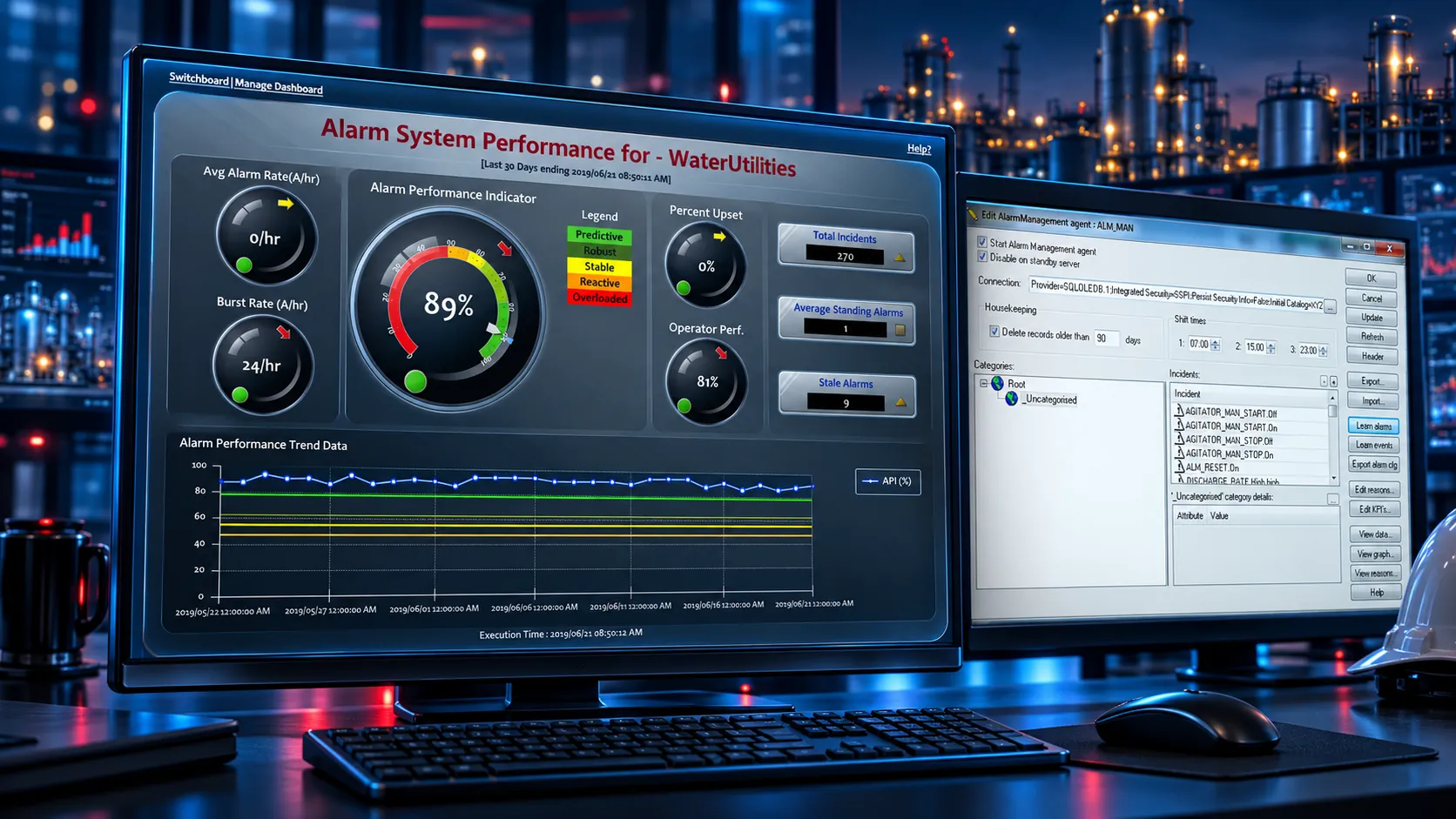
Adroit Alarm Management structures, measures and analyses alarm and event data to help reduce alarm noise, improve operator response and support safer, continuously improving operations.
Bring Structure to Every Alarm
An alarm should direct an operator to a condition that requires a response - but when alarm systems are overloaded with nuisance alarms, standing alarms, excessive high-priority alarms or alarm floods, important information can be difficult to identify. Adroit Alarm Management gives engineering and operations teams a structured way to capture, contextualise and evaluate alarm behaviour so that improvement can be based on measurable evidence rather than assumptions.
The Alarm Management Agent routes new and existing alarms from Adroit Software into a structured SQL alarm management database. Alarms can be categorised, linked to associated process values and supporting documents such as SOPs, assigned predefined reasons and notes, and measured against configurable performance KPI targets. Multiple Adroit Agent Servers can feed a single alarm management database, allowing alarm information to be consolidated for site-wide or broader analysis.
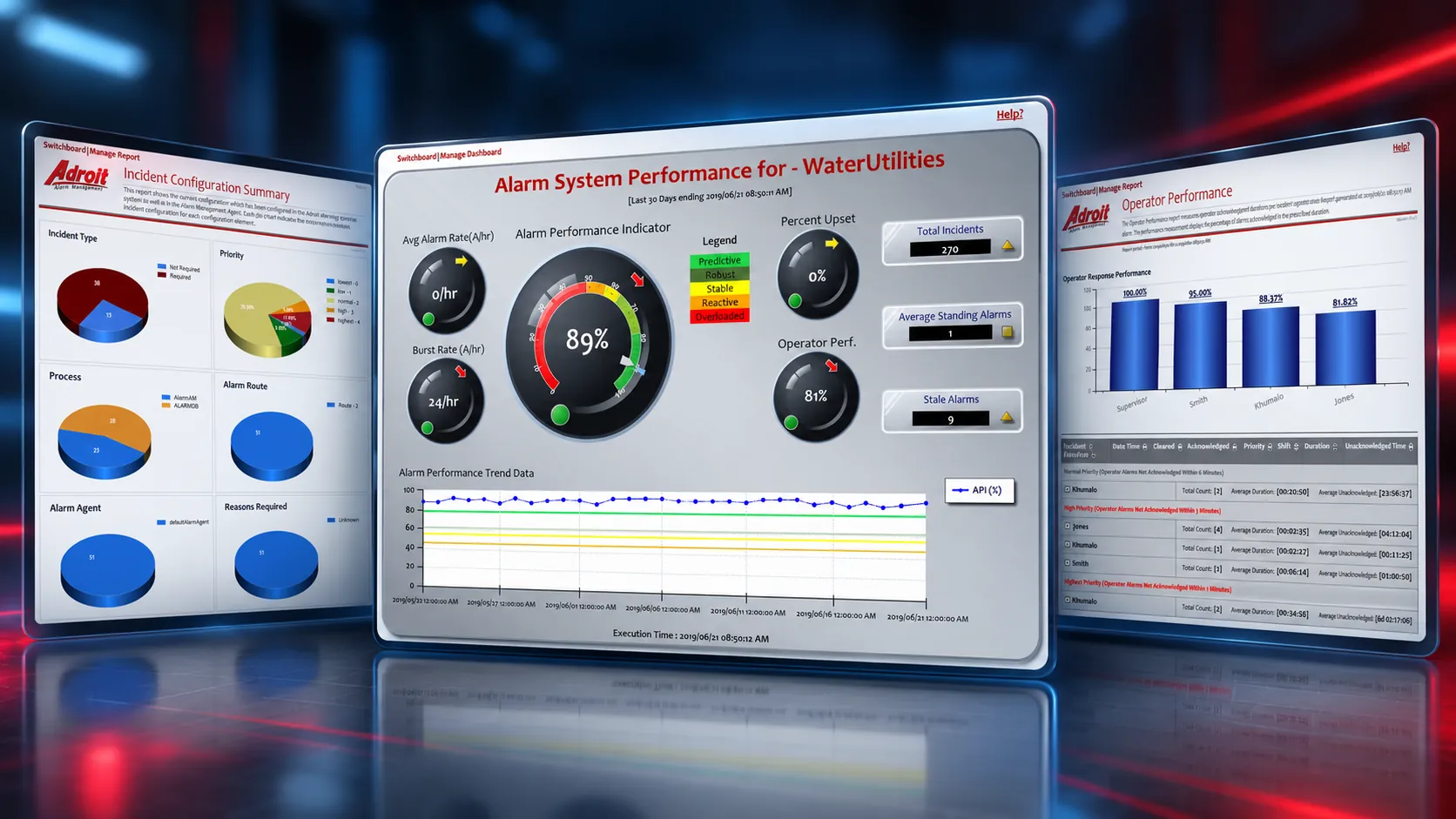
Through the Adroit Report Suite, the logged alarm data is transformed into web-based performance and analysis reports, including the Alarm System Performance Dashboard, Performance Comparison, Bad Actors, Alarm Category, Alarm Type, Reasons & Notes, Associated Values, Exception Incidents and Operator Performance reports. The approach draws on recognised alarm-management guidance including ISA-18.2 and EEMUA 191, helping teams identify recurring issues, evaluate operator manageability and support continuous improvement.
What Adroit Alarm Management Does
Features and Benefits
Route new and existing alarms through the Alarm Management Agent into a structured SQL alarm management database for consistent historical storage and analysis.
Benefit: Creates a reliable central source of alarm history that can be measured, filtered and analysed over time.
Organise alarms into meaningful categories such as process, equipment, plant area or other user-defined groupings.
Benefit: Makes it easier to focus analysis on the parts of the operation that need attention and to compare alarm behaviour across areas.
Assign relevant process values to alarms so that incident records contain additional operating context when the alarm occurs.
Benefit: Helps engineers understand what was happening around an incident and supports more informed root-cause investigation.
Set alarm-system performance targets and use the reporting tools to measure KPIs such as alarm rate, burst rate, percent upset, standing alarms, stale alarms and operator performance.
Benefit: Turns alarm performance into measurable targets so teams can identify deterioration, benchmark progress and demonstrate improvement.
Configure predefined reasons and sub-reasons for operator input and retain notes against incidents for later analysis.
Benefit: Adds operational context and traceability to alarm history, helping teams understand why incidents occurred and how they were handled.
Link alarms to supporting documents such as standard operating procedures and other relevant reference material.
Benefit: Gives operators and engineers faster access to the information needed to respond consistently and correctly.
Connect multiple Adroit Agent Servers to a single Alarm Management database.
Benefit: Supports consolidated alarm analysis across multiple systems or operational areas without fragmenting performance data.
Import and export alarm-management configuration in bulk using Microsoft Excel.
Benefit: Reduces repetitive engineering work and makes large-scale configuration changes easier to review and maintain.
Configure housekeeping rules for alarm records and maintain the Alarm Management database as the volume of historical data grows.
Benefit: Helps keep the database manageable and supports reliable long-term reporting.
Analyse alarm performance through web-based reports including the Alarm System Performance Dashboard, Performance Comparison, Bad Actors, Alarm Category, Alarm Type, Reasons & Notes, Associated Values, Exception Incidents and Operator Performance reports, with drill-through analysis where applicable.
Benefit: Converts logged alarm history into practical insight for reducing recurring alarms, improving operator response and driving continuous improvement.

Technology Stack & Data Flow
How Adroit Alarm Management Works
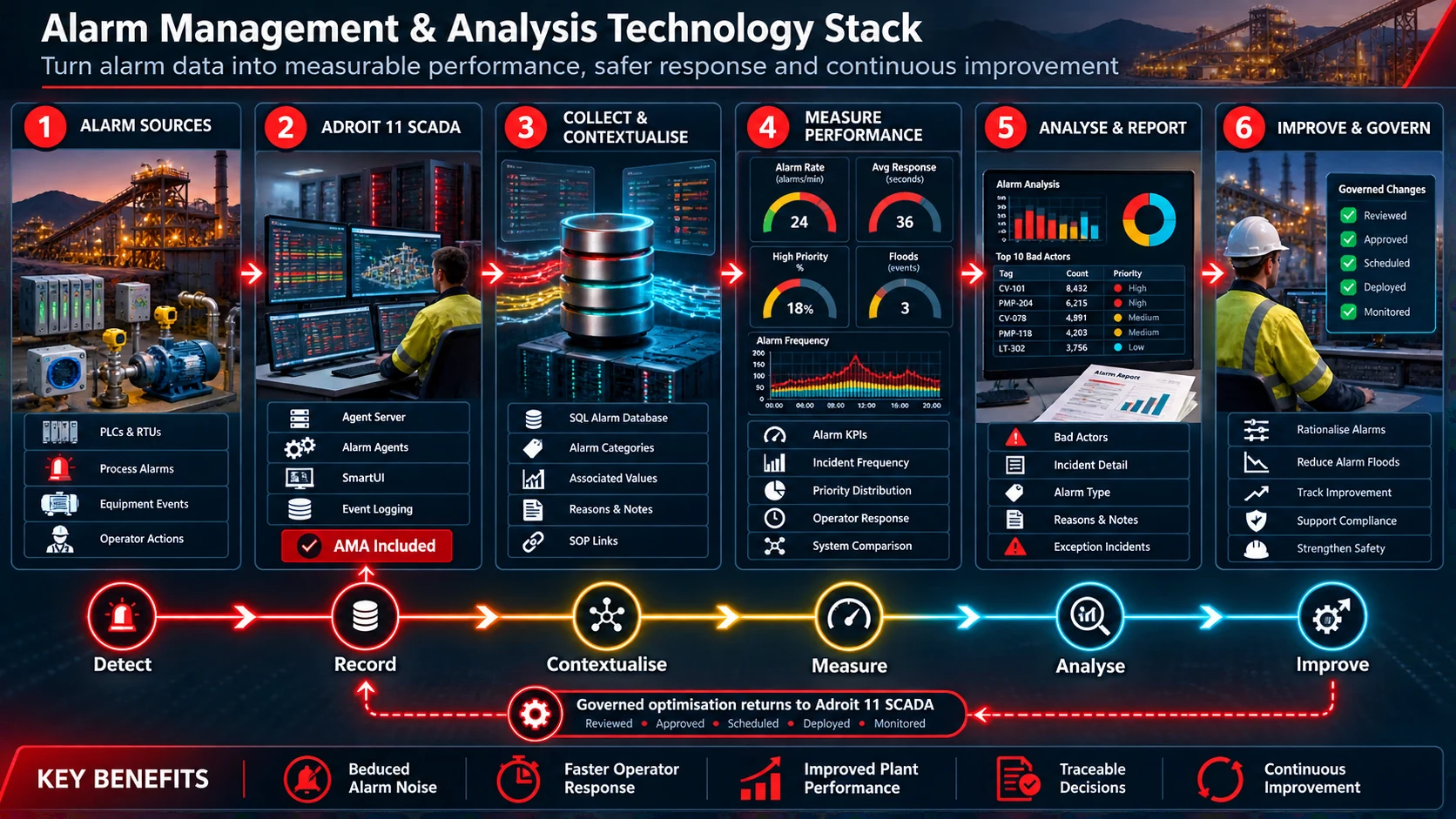
Adroit Alarm Management creates a closed improvement loop from alarm detection through structured recording, contextualisation, performance measurement, analysis and governed optimisation. This allows alarm behaviour to be treated as a measurable operational discipline rather than simply a stream of notifications.
Detect - Alarm Sources
Capture alarms and events from PLCs, RTUs, process conditions, equipment events and operator actions.
Record - Adroit 11 / Adroit Software
The Agent Server, Alarm Agents, SmartUI and event-logging functions record and route alarm information into the Alarm Management workflow.
Contextualise - Alarm Management Database
Store alarm history in a structured SQL database and enrich incidents with categories, associated values, reasons, notes and links to SOPs or other supporting documents.
Measure - Alarm Performance KPIs
Measure alarm-system behaviour using KPIs such as average alarm rate, burst rate, Alarm Performance Indicator, percent upset, standing and stale alarms, incident frequency and operator response.
Analyse - Report and Compare
Use the Alarm Management Report Pack to identify bad actors, analyse alarm types and categories, review incident detail, compare performance periods and investigate reasons, notes and exceptions.
Improve and Govern
Use the resulting evidence to rationalise alarms, reduce floods and standing alarms, track improvement and govern changes through review, approval, deployment and monitoring.
A Closer Look at Adroit Alarm Management
From agent configuration to performance dashboards, bad-actor analysis and operator response.
Configure, Measure and Investigate
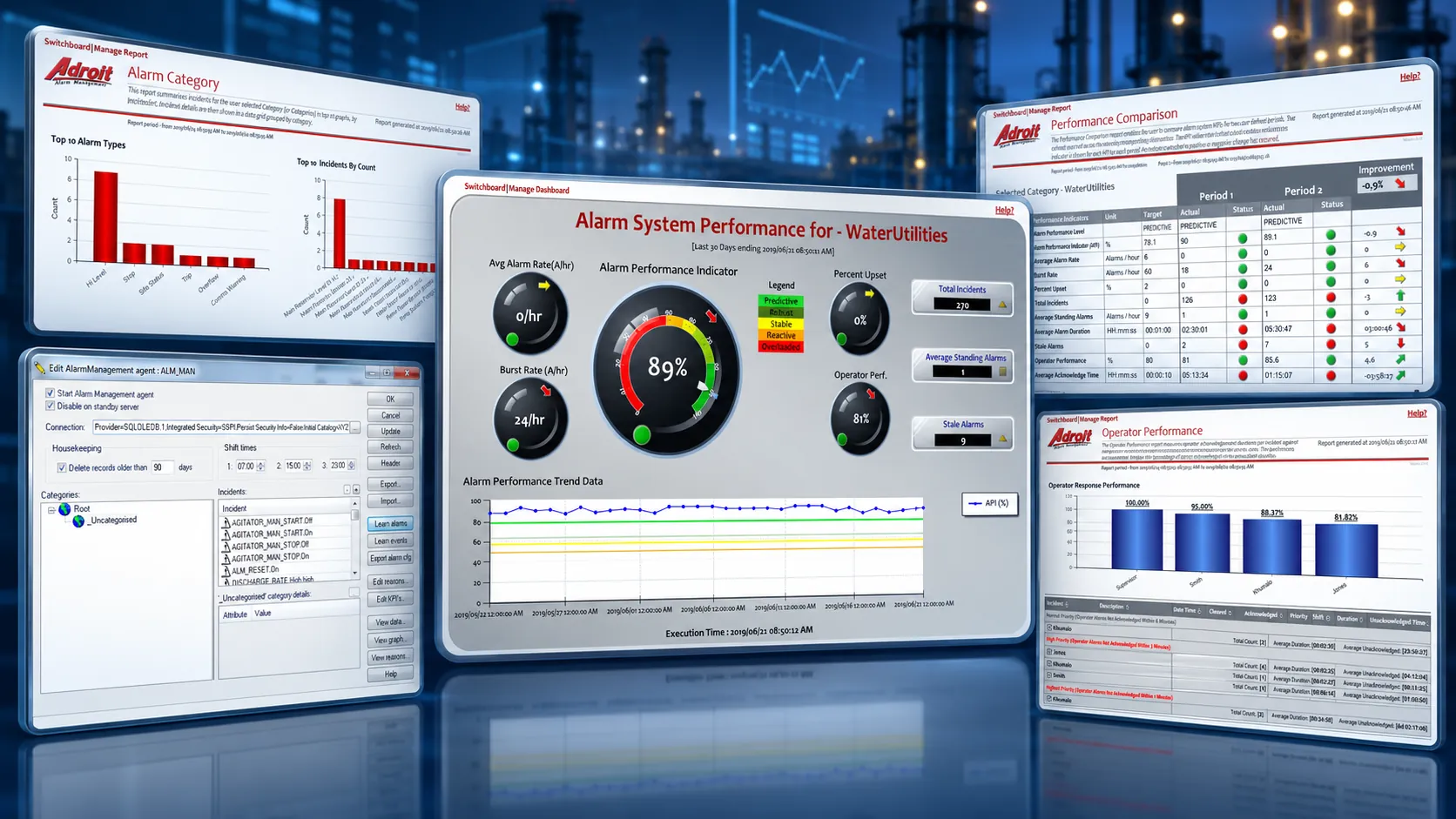
Explore the tools used to configure alarm context, measure alarm-system performance and investigate the issues that have the greatest impact on operators and plant performance.
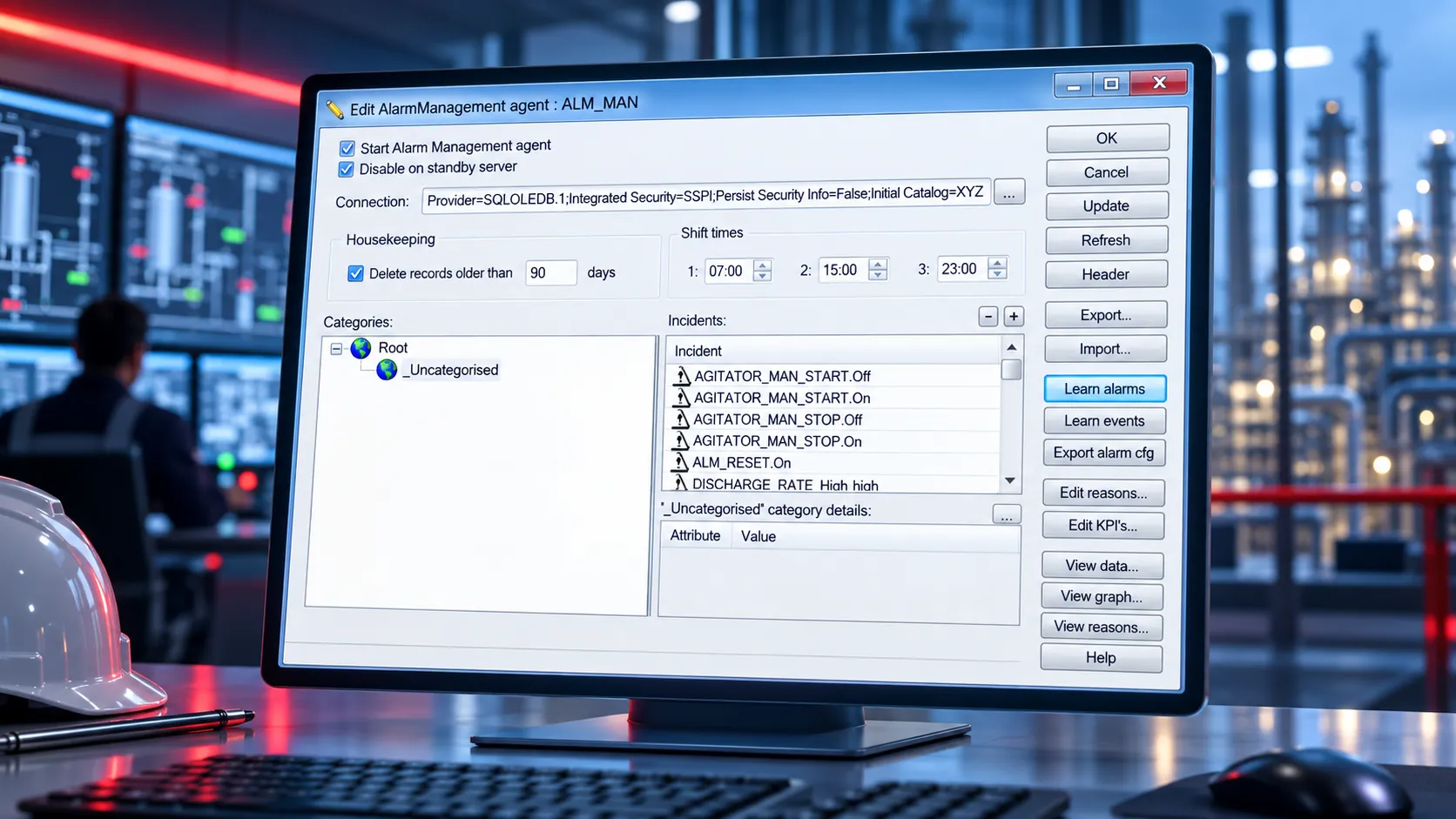
Alarm Management Agent Configuration
Configure database connectivity, housekeeping, categories, incidents, reasons and KPI targets from the Alarm Management Agent.
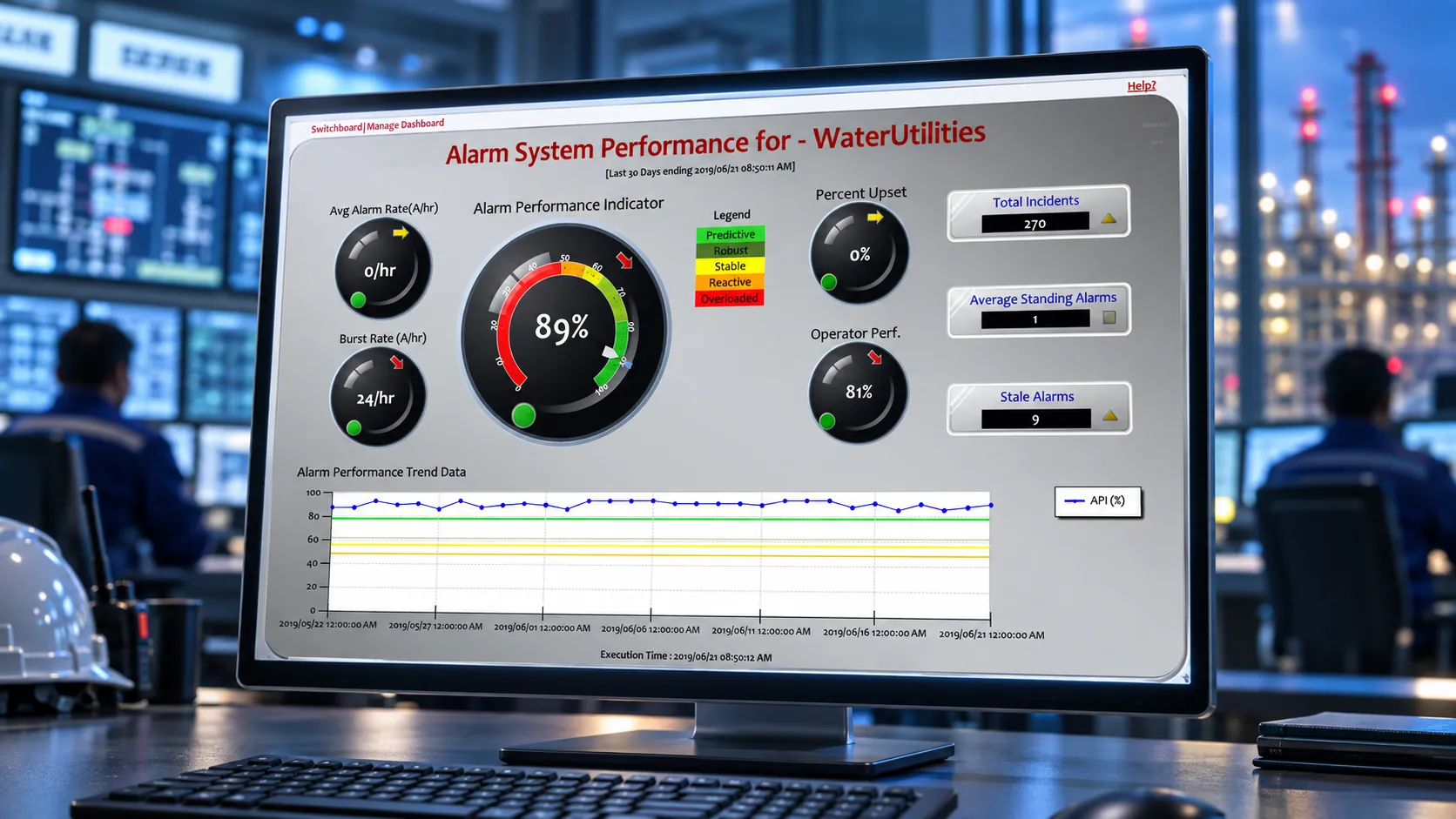
Alarm System Performance Dashboard
Monitor key indicators including average alarm rate, burst rate, Alarm Performance Indicator, percent upset, total incidents, standing alarms, stale alarms, operator performance and performance trends.
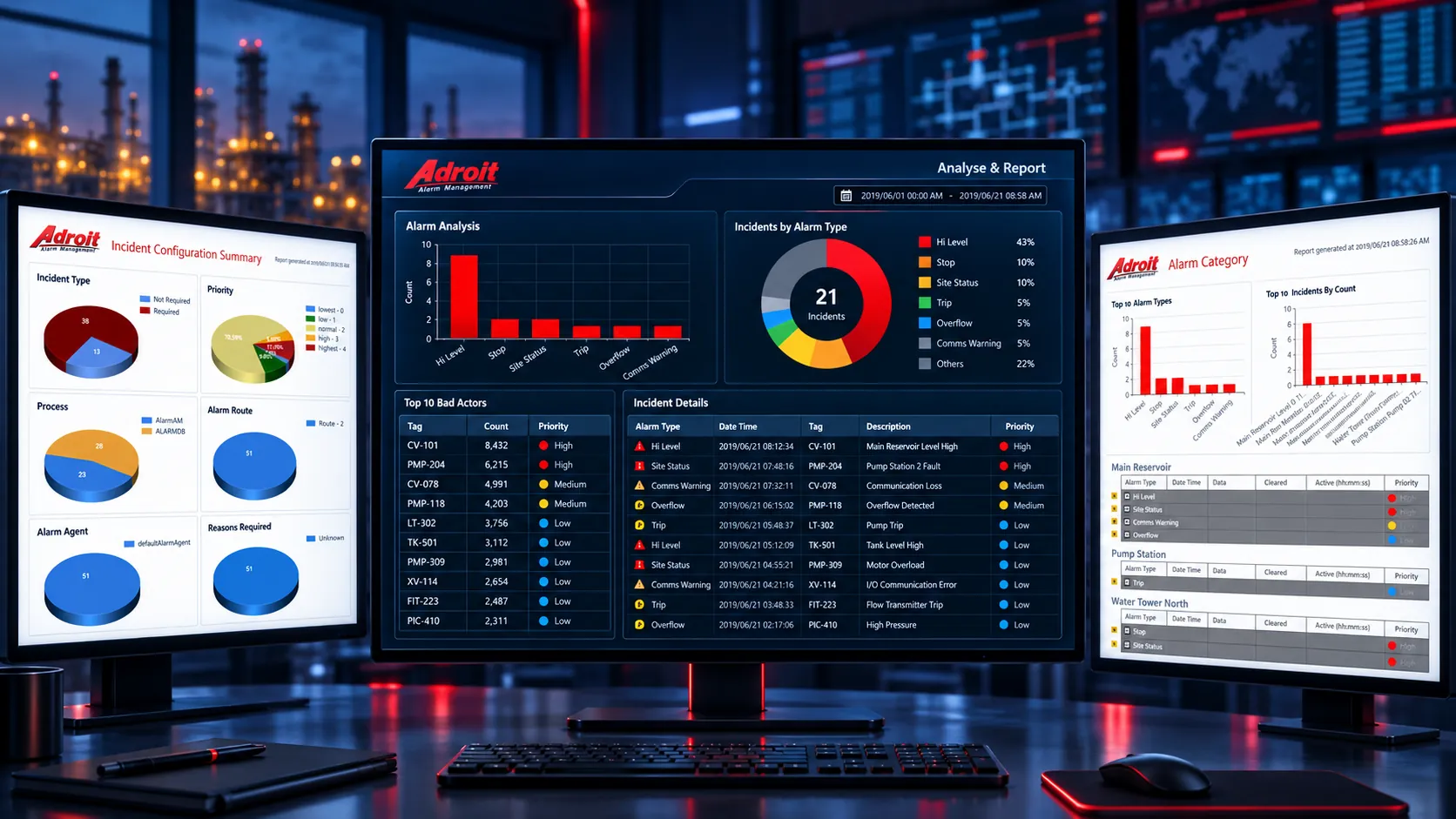
Alarm Analysis and Bad Actors
Identify recurring or problematic alarms and analyse alarm distribution by category, type, incident, priority, process, shift and other available context.
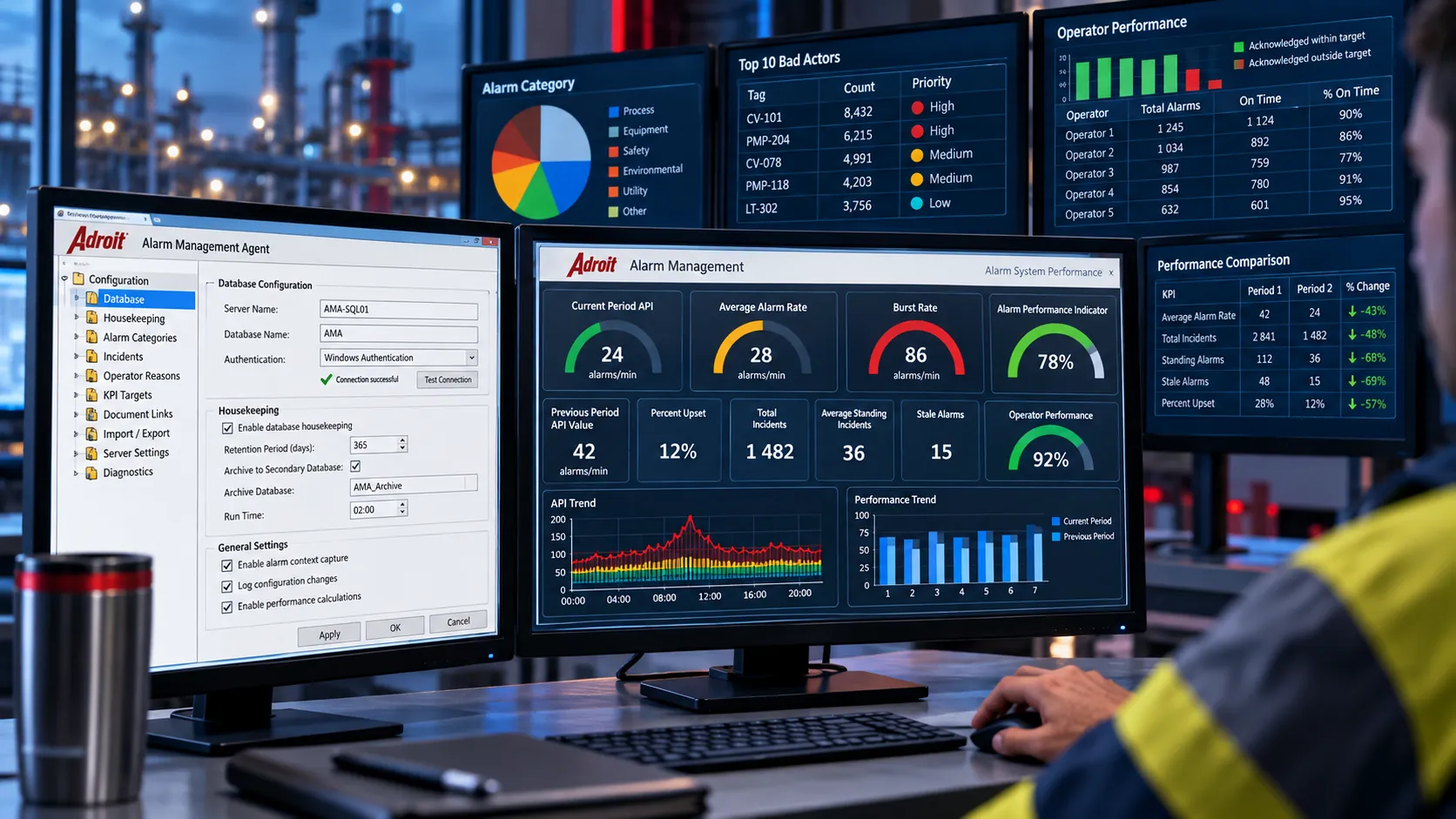
Performance Comparison and Operator Response
Compare alarm KPIs across two user-defined periods to track whether alarm-system performance is improving, and review operator acknowledgement performance against configured response targets.

Helpful Resources
Questions often asked.
Adroit Alarm Management is an alarm-management and reporting solution that routes alarm information into a structured database, adds operational context and provides reports for measuring, analysing and improving alarm-system performance.
It helps address common alarm-system problems such as alarm floods, excessive standing alarms, too many high-priority alarms, recurring nuisance alarms and a lack of structured information for performance improvement.
The Alarm Management Agent routes new and existing alarms into a structured SQL alarm management database where incidents can be categorised and enriched with associated process values, reasons, notes and supporting document links.
The Alarm System Performance reporting includes measures such as average alarm rate, burst rate, Alarm Performance Indicator, percent upset, total incidents, average standing alarms, stale alarms and operator performance, with current-versus-previous-period trend indicators.
The Alarm Management Report Pack includes performance and analysis reports such as Alarm System Performance, Performance Comparison, Bad Actors, Alarm Category, Alarm Type, Reasons & Notes Analysis, Associated Values, Incident Detail, Exception Incidents and Operator Performance.
Yes. The Bad Actors reporting highlights alarms that occur frequently or continuously and can contribute to system degradation, helping teams prioritise the underlying issues that will deliver the greatest improvement.
Yes. The Operator Performance report measures acknowledgement duration per incident against configured targets for alarm priorities and shows the percentage of alarms acknowledged within the required response period.
Yes. Incidents can be configured with predefined reasons and sub-reasons, notes and associated process values, creating a richer history for later investigation and reporting.
Yes. Multiple Adroit Agent Servers can connect to a single Alarm Management database, supporting consolidated alarm data for wider operational analysis.
The Alarm Management Agent and associated reports draw on recognised alarm-management guidance including ISA-18.2 and EEMUA 191. The reporting tools help organisations measure alarm behaviour against defined targets and use the results to support ongoing improvement.
Make Every Alarm Count.
Bring structure, context and measurable performance to your alarm system, so your operators can focus on the alarms that matter.